
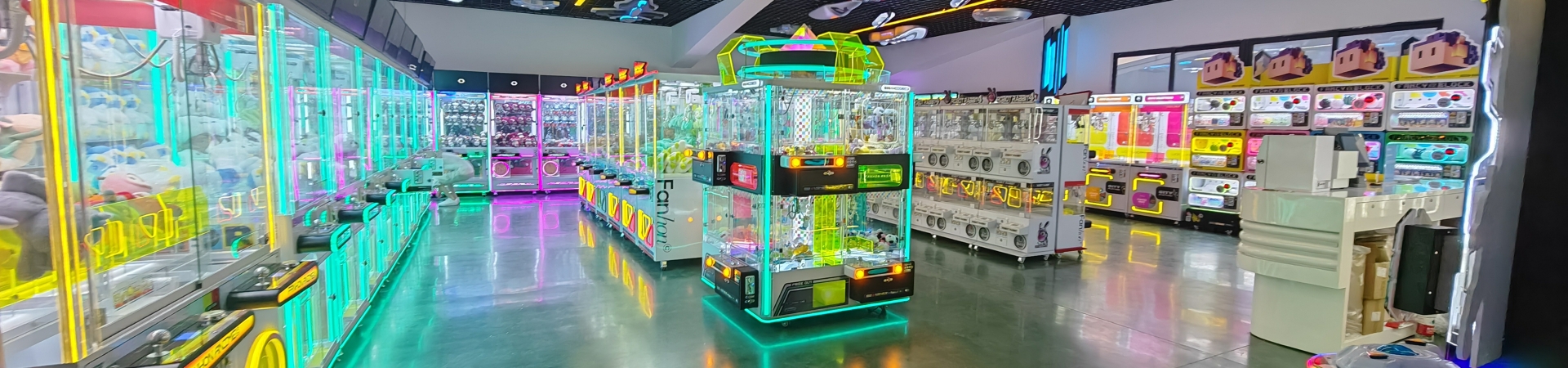
Overview
A mini arcade game center—typically defined as a small-format entertainment venue with 10–30 amusement machines occupying 500–2,000 square feet—represents a middle ground between the route-operator model (placing individual machines in third-party venues) and a full-scale family entertainment center. This format has gained traction in strip malls, shopping center kiosks, entertainment districts, and mixed-use developments because it offers a manageable investment level while providing the revenue density and branding benefits of a dedicated space. Based on industry data and operator-reported costs through early 2026, the total startup cost for a mini arcade ranges from approximately $30,000 to $150,000 depending on location, machine mix, and build-out requirements.
Category 1: Lease and Build-Out Costs
Commercial lease costs vary dramatically by market and property type. In the U.S., small retail spaces suitable for mini arcades (800–1,500 sq ft in strip malls or secondary shopping centers) lease for approximately $15–$35 per square foot per year in suburban markets and $30–$80+ per square foot in urban or prime retail locations. For a 1,000-square-foot space, this translates to $1,250–$6,667 per month in rent.
Most landlords require a security deposit of 1–3 months' rent and may offer tenant improvement (TI) allowances to offset build-out costs. Build-out for a mini arcade typically includes flooring (commercial-grade carpet tile or vinyl at $3–$8 per square foot installed), lighting upgrades (LED ambient and accent lighting, $1,000–$4,000), electrical upgrades to support multiple machines (a mini arcade may require 30–60 amps of dedicated circuit capacity; electrical work typically costs $1,500–$5,000), basic signage (exterior and interior, $500–$3,000), and wall treatment and décor ($500–$3,000). Total build-out costs for a modest mini arcade typically range from $5,000 to $20,000 beyond the cost of machines themselves.
Category 2: Machine Acquisition
The machine mix is the largest capital expenditure. A typical mini arcade game center with 15–25 machines might include 5–8 claw/crane machines, 3–5 redemption games, 2–4 video arcade cabinets (classic or modern), 1–2 photo booth or sticker machines, and 1–3 specialty items such as air hockey tables, basketball shooters, or racing simulators.
Purchasing all new machines from quality brands would cost approximately $60,000–$150,000 for this mix. However, most budget-conscious operators use a blend of new and used machines. A practical budget strategy might allocate 60% of machine spend to quality used equipment and 40% to new machines for key attractions. Under this approach, a 20-machine setup could be assembled for approximately $25,000–$60,000, depending on sourcing efficiency. Importing directly from Chinese manufacturers for claw machines and simpler redemption games, while purchasing used premium brands (SEGA, Elaut, Raw Thrills, Bay Tek) for flagship attractions, is a common strategy.
Category 3: Payment and Management Systems
Modern mini arcades increasingly use card-based or token-based payment systems rather than (or in addition to) direct coin operation. A card swipe system from providers like Embed, Intercard, or Semnox typically costs $5,000–$15,000 for initial hardware and software setup (including card reader modules for each machine, a central kiosk for card loading/recharging, and management software). These systems offer advantages in revenue tracking, cashless convenience, and the psychological effect of preloaded spending (which typically increases per-visit spending by 15%–30% according to Embed's published data).
Alternatively, operators can use standalone cashless readers (Nayax, Cantaloupe) on individual machines for $200–$500 per machine, avoiding the upfront cost of a centralized system but losing some of the integrated management benefits.
Category 4: Prize Inventory and Redemption Counter
If the arcade includes redemption games with a prize counter, initial prize inventory investment typically ranges from $2,000–$8,000 depending on the size and variety of prizes offered. Setting up the prize counter (display shelving, signage, a point-of-sale system for tracking ticket/point redemption) adds another $1,000–$3,000.
For claw machines only, initial prize stocking costs approximately $50–$150 per machine.
Category 5: Business Formation, Licensing, and Insurance
Business entity registration, EIN, and state business licensing costs typically total $200–$1,000. Amusement device permits (if required in the jurisdiction) cost $25–$300 per machine annually. Commercial general liability insurance for a small arcade venue typically costs $1,500–$4,000 per year. Some landlords or jurisdictions may require additional coverage such as property insurance or workers' compensation (if employees are hired). Total first-year legal and administrative startup costs typically range from $2,500–$8,000.
Category 6: Staffing (Optional)
Many mini arcades operate with minimal staffing—some are entirely unattended during business hours with periodic operator visits, while others employ part-time attendants. If staffing is included, budget $12–$18 per hour for part-time attendants in most U.S. markets, with typical coverage needs of 20–40 hours per week. Monthly staffing costs for a small operation range from $1,000–$3,000.
Category 7: Marketing and Launch
A modest marketing budget for a mini arcade launch—including social media advertising, local flyers, grand opening promotions, and Google Business profile setup—typically runs $500–$2,000. Ongoing monthly marketing spend of $100–$500 is common for small operators, primarily focused on social media and local search optimization.
Total Startup Cost Summary
Combining all categories, a mini arcade with approximately 15–20 machines in a modest suburban location can be realistically launched for $30,000–$75,000 using a blend of new and used equipment and modest build-out. A higher-end setup in a premium location with 20–30 machines and a more polished build-out could require $75,000–$150,000. Operators with severely constrained budgets have launched viable micro-arcades (5–10 machines in kiosk or small-format spaces) for $10,000–$25,000.
Revenue and Break-Even Projections
A 20-machine mini arcade generating average revenue of $600 per machine per month would produce $12,000 in monthly gross revenue. After typical operating costs—rent ($2,000–$4,000), prizes ($1,500–$2,500), electricity ($200–$400), staffing ($0–$2,000), payment processing ($400–$700), maintenance ($300–$500), insurance and licensing ($200–$400), and marketing ($200–$400)—monthly net profit typically ranges from $2,000–$5,000 for a well-managed small operation. At this rate, a $50,000 initial investment would achieve payback in approximately 10–25 months.
Frequently Asked Questions
What is the minimum space needed for a mini arcade? A viable mini arcade can operate in as little as 400–600 square feet with 5–10 machines. Below this threshold, the venue may not attract sufficient destination traffic to justify a dedicated lease. The sweet spot for most mini arcades is 800–1,500 square feet, accommodating 15–25 machines with adequate customer circulation space.
Should I open a dedicated space or stick with the route-operator model? The route model offers lower fixed costs and faster breakeven but limits branding and customer experience control. A dedicated space offers higher per-location revenue potential and brand-building opportunities but carries lease obligations and higher fixed overhead. Many operators start with a route model and transition to a dedicated space once they have sufficient capital and operational experience.
What permits do I need beyond standard business licensing? Depending on jurisdiction, you may need a special use permit or conditional use permit if the space is not already zoned for entertainment/amusement use, a fire department occupancy permit, a health department permit (if food or beverages are sold), and certificates of occupancy. Consult your local planning and zoning department early in the site-selection process.
References
IBISWorld. "Amusement Machine Operators in the US." NAICS 71312. 2024.
Embed. "Cashless Amusement Systems – Product Information and Case Studies." https://www.embedcard.com/
Intercard. "Cashless Payment Solutions for FECs and Arcades." https://www.intercardinc.com/
IAAPA. "Small Location Entertainment Center Resources." https://www.iaapa.org/
LoopNet / CoStar. "Commercial Retail Lease Rate Data." https://www.loopnet.com/
Disclaimer: All figures cited in these articles are based on publicly available industry data, operator-reported statistics, and market research reports available through early 2025, with reasonable projections into 2026. Market conditions, regulations, and costs vary by region and change over time. Operators should verify all figures against current local data before making business decisions. References include both free and subscription-based sources; some linked reports may require purchase for full access.