
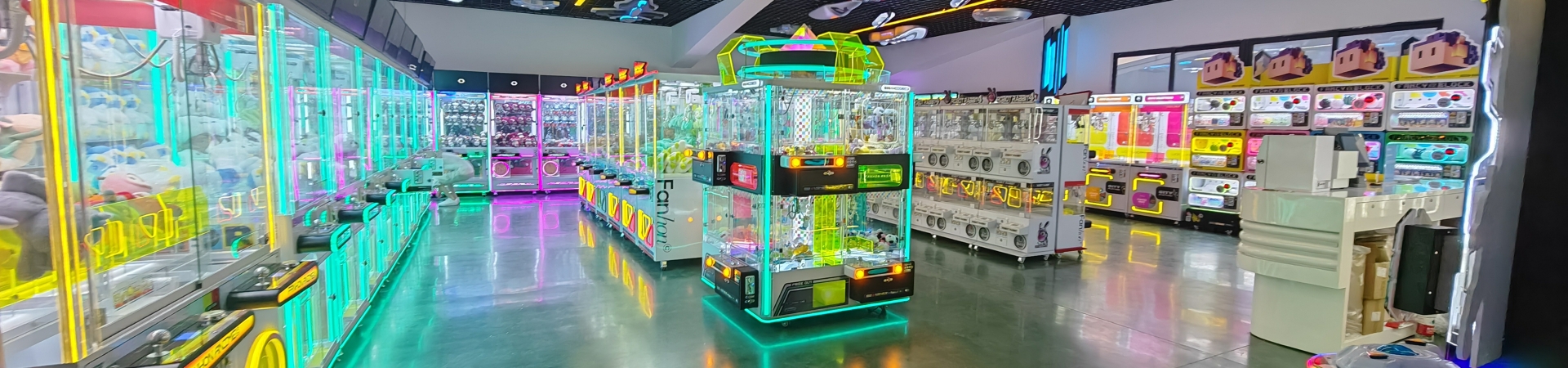
Overview
Claw machines consistently rank among the highest-margin amusement devices in both mall placements and arcade environments, primarily because they combine relatively low operating costs with strong impulse-play appeal. However, profit margins vary substantially depending on location type, operator efficiency, prize strategy, and machine payment capability. This article consolidates available industry data and operator-reported figures to provide a clear picture of claw machine profitability.
Gross Revenue Benchmarks
Based on aggregated data from operator surveys, industry reports from IBISWorld and IAAPA, and publicly shared figures in operator communities, gross monthly revenue per claw machine falls within the following general ranges. In high-traffic mall locations (Tier 1 malls with 10+ million annual visitors), a single claw machine can generate $1,000–$3,000 per month. In mid-traffic malls and shopping centers, the range is typically $500–$1,200 per month. In dedicated arcades and family entertainment centers, revenue per machine tends to be $600–$2,000, depending on overall foot traffic and the strength of the surrounding game mix. In lower-traffic standalone placements (grocery stores, laundromats, small retail), machines typically generate $150–$600 per month.
These figures represent gross coin/card-in revenue before any deductions.
Gross Profit Margins
Gross profit margin for a claw machine—calculated as revenue minus direct variable costs (prizes, electricity, and payment processing fees)—typically ranges from 50% to 70%. The primary variable driving this margin is the prize cost ratio. Operators who maintain a prize-cost-to-revenue ratio of 20%–30% (meaning prizes cost 20–30 cents for every dollar of revenue collected) achieve the upper end of this range. Those using higher-quality or branded prizes at 35%–45% cost ratios see lower but still healthy gross margins.
Electricity costs are minimal (typically 1%–3% of revenue), and cashless processing fees add 3%–7% of revenue for machines accepting card or mobile payments.
Net Profit Margins by Location Type
Net profit margin accounts for all costs including location fees, insurance, licensing, maintenance, and administrative overhead. In mall environments, where location costs are highest, net margins typically fall between 15% and 30%. A machine generating $1,500/month gross in a mall with a 30% revenue-share agreement sends $450 to the venue, leaving approximately $1,050. After prize costs of $350, maintenance reserve of $50, insurance/licensing of $25, and payment processing of $60, the operator nets roughly $565, representing a net margin of about 38%—though this example represents a strong performer. Average-performing mall machines typically yield 15%–25% net margins.
In arcades and FECs, where machines benefit from destination traffic and operators often own or lease the overall space, the location cost component is shared across many machines. In these environments, claw machines often achieve net margins of 25%–40% when their share of rent and overhead is allocated proportionally.
In route placements with revenue-share agreements in lower-rent venues, net margins can be surprisingly high—30%–50%—because venue revenue shares are typically only 20%–30% and other overhead is minimal.
Comparison to Other Amusement Machines
Claw machines generally outperform classic video arcade cabinets on margin percentage, primarily because vintage or standard video games generate lower per-play revenue (typically $0.25–$1.00 per play versus $1.00–$2.00 for claw machines) while having comparable fixed costs. However, redemption games in FECs can rival or exceed claw machine margins when well-managed. Among unattended vending-style placements, claw machines tend to outperform traditional product vending machines on margin percentage, though vending machines may generate higher absolute revenue in some locations due to repeat daily purchases.
Factors That Erode Margins
The most common margin-eroding factors reported by operators include overly generous win rates (prize cost exceeding 35% of revenue), poor location selection (machines generating under $300/month rarely break even), delayed maintenance leading to out-of-service periods, and high-cost revenue-share agreements in premium mall locations that leave insufficient margin after prize and operating costs.
Frequently Asked Questions
What is the industry-standard target for prize cost as a percentage of revenue? Most experienced operators target 20%–30%. The AMOA and industry consultants frequently cite 25% as a strong benchmark. Below 20%, players may become frustrated with perceived difficulty, reducing repeat play. Above 30%, margins can become thin, especially in high-rent locations.
Do claw machines in malls outperform those in arcades? On gross revenue, mall machines in premium locations often outperform due to higher impulse foot traffic. However, on net margin percentage, arcade placements may be competitive or superior because operators have more control over the environment and face less aggressive venue revenue shares.
How do seasonal fluctuations affect profitability? Claw machine revenue in malls typically peaks during holiday shopping seasons (November–January) and school vacation periods (June–August), with revenue increases of 20%–50% above baseline months. Arcade-based machines show less seasonal variance but still benefit from school holidays and weekend patterns.
References
IBISWorld. "Amusement Machine Operators in the US – Industry Report." NAICS 71312. 2024.
IAAPA. "Industry Performance and Benchmarking Reports." 2023–2024. https://www.iaapa.org/
AMOA. Operator community resources and margin benchmarking discussions.
Vending Market Watch. "State of the Vending Industry Report." 2024. https://www.vendingmarketwatch.com/
Nayax. "Cashless Payment Impact on Amusement Revenue." Published case studies. https://www.nayax.com/