
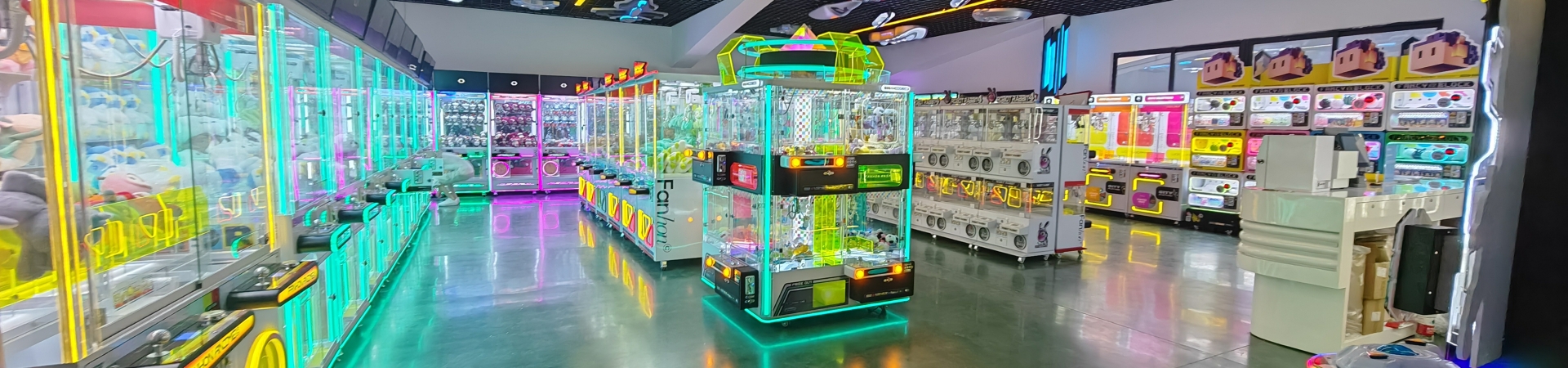
Overview
China is the world's largest manufacturer and exporter of claw machines, with the majority of production concentrated in Guangdong Province—particularly in the cities of Guangzhou, Zhongshan, and Panyu. Importing directly from Chinese factories can reduce per-unit machine costs by 40%–70% compared to purchasing through domestic distributors or resellers. However, the process involves multiple steps across sourcing, payment, shipping, customs clearance, and last-mile delivery. This article walks through the full import process from initial supplier selection to machines arriving at their operating locations.
Phase 1: Supplier Selection and Sample Order
Begin by identifying potential manufacturers through Alibaba, Made-in-China, Global Sources, trade show contacts (IAAPA, GTI Expo, CIAE), or referrals from other operators. Narrow the list to 3–5 candidates based on factory verification, certifications, product range, and communication quality (as detailed in Article 7 of this series).
Order 1–2 sample machines before committing to a bulk order. Sample units are typically sold at retail price without bulk discount, and the buyer pays shipping. Air freight for a single claw machine (approximately 100–200 kg packed) from China to the U.S. costs $300–$800 depending on size, weight, and speed of service. Evaluate sample quality thoroughly over at least 2–4 weeks of operational testing.
Phase 2: Negotiation and Order Placement
Once satisfied with sample quality, negotiate bulk pricing, customization (branding, colors, features), payment terms, packaging specifications, and warranty terms. Key negotiation points include price per unit at various order quantities (5, 10, 20, 50+ units), packaging quality (wooden crate, foam padding, and corner protection are essential to prevent shipping damage), and lead time from order confirmation to shipment (typically 15–30 days for standard models, 30–60 days for customized units).
Standard payment terms for established relationships are 30% deposit by T/T (telegraphic transfer/wire transfer) with 70% balance due before shipment (against copy of Bill of Lading or inspection report). For first orders, using Alibaba Trade Assurance or a Letter of Credit through your bank provides additional security.
Phase 3: Pre-Shipment Inspection
Before the factory ships the order, arrange a pre-shipment inspection. This can be conducted personally (if traveling to China), by a trusted sourcing agent, or by a third-party inspection company (SGS, Bureau Veritas, Intertek, or Asia Inspection). The inspection should verify quantity, model correctness, physical dimensions, electrical functionality, cosmetic quality, prize mechanism operation, payment system functionality, and packaging adequacy. Inspection costs typically range from $200–$500 per visit. This step is strongly recommended for orders exceeding $5,000.
Phase 4: Shipping and Freight
There are two primary shipping methods. Sea freight is the standard for bulk orders and costs significantly less per unit than air freight. A 20-foot container (FCL – Full Container Load) can hold approximately 15–25 standard claw machines depending on size, with container shipping costs from Guangzhou/Shenzhen to U.S. West Coast ports (Los Angeles, Long Beach) of approximately $2,000–$5,000 per container (freight rates fluctuated substantially during 2021–2024 but have moderated toward pre-pandemic levels). Transit time is 18–30 days to the U.S. West Coast and 28–40 days to the East Coast. For smaller orders, LCL (Less than Container Load) shipping is available through freight forwarders at higher per-unit rates.
Air freight is faster (5–10 days) but substantially more expensive—typically $4–$8 per kilogram, making it viable only for small sample orders or urgent shipments.
Work with an international freight forwarder experienced in handling commercial goods from China. Companies such as Flexport, Freightos, DSV, and numerous regional freight forwarding firms can handle end-to-end logistics.
Phase 5: Customs Clearance and Duties
Upon arrival at the destination port, goods must clear customs. In the U.S., this requires a customs broker (often provided by the freight forwarder). Key documents required include the commercial invoice from the manufacturer, packing list, Bill of Lading (sea) or Air Waybill (air), certificate of origin, and any applicable product certifications (FCC, UL).
U.S. import duties on claw machines are determined by their Harmonized Tariff Schedule (HTS) classification. Amusement machines generally fall under HTS code 9504 (articles for funfair, table or parlor games). The standard duty rate under this classification is typically 0%–3.5%, but additional tariffs under Section 301 (China-specific tariffs enacted beginning in 2018) may apply and have ranged from 7.5% to 25% depending on the specific sub-classification and prevailing trade policy. As of early 2025, the tariff situation for Chinese-origin amusement machines required careful HTS classification—operators should consult with their customs broker for the current applicable rate.
In addition to duties, goods are subject to Merchandise Processing Fee (0.3464% of declared value, minimum $31.67, maximum $614.35 as of recent rates) and Harbor Maintenance Fee (0.125% of declared value for sea shipments).
Phase 6: Last-Mile Delivery and Setup
After customs clearance, machines must be transported from the port to their final destination. Freight forwarders can arrange domestic trucking, or operators can hire local freight carriers. For deliveries to a warehouse or storage facility, standard LTL (Less-than-Truckload) freight rates apply. Operators should inspect all machines upon delivery for shipping damage before signing the delivery receipt, as damage claims against the freight carrier must be documented at the time of delivery.
Phase 7: Post-Import Compliance
After import, ensure that machines comply with all local electrical codes and amusement device regulations before placement. If machines were not pre-certified for FCC/UL compliance, some jurisdictions may require testing or certification before commercial deployment.
Frequently Asked Questions
What is the minimum order quantity for direct import to be cost-effective? Most freight forwarders and manufacturers agree that direct import becomes financially advantageous at approximately 5–10 units, where container shipping costs can be distributed across enough machines to achieve meaningful per-unit savings. For smaller quantities, LCL shipping or air freight can still be viable but with less dramatic cost advantages.
How do I handle warranty claims on imported machines? Warranty enforcement on imported goods typically involves the manufacturer shipping replacement parts (PCBs, motors, etc.) at their cost while the operator handles local labor. Turnaround time for parts from China is typically 7–14 days via express courier. Maintaining a spare parts inventory from the initial order significantly reduces downtime.
What are the biggest risks of importing from China? The three most cited risks are quality discrepancies between samples and bulk production, shipping damage due to inadequate packaging, and tariff/regulatory surprises. All three can be substantially mitigated through pre-shipment inspections, explicit packaging specifications, and consultation with a customs broker before ordering.
References
U.S. International Trade Commission. "Harmonized Tariff Schedule of the United States." https://hts.usitc.gov/
U.S. Customs and Border Protection. "Importing into the United States – A Guide." https://www.cbp.gov/
Flexport. "Freight Shipping from China – Guide and Rates." https://www.flexport.com/
Freightos. "China Shipping Cost Calculator and Transit Times." https://www.freightos.com/
Office of the United States Trade Representative. "Section 301 Tariff Actions." https://ustr.gov/