
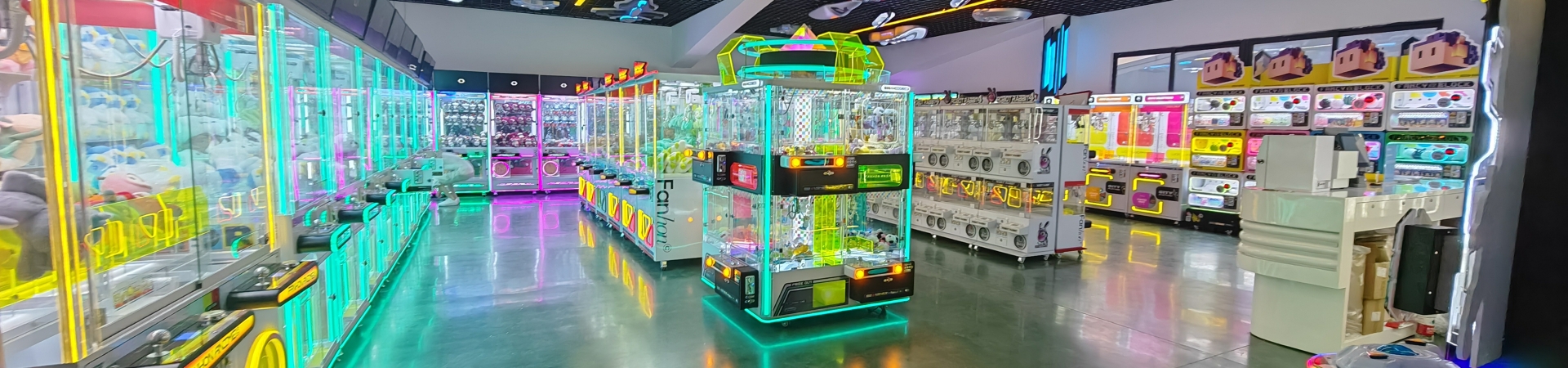
Quick Answer: The highest-revenue locations for claw machines are shopping mall food courts, family entertainment centers (FECs), grocery store lobbies, movie theater lobbies, and bowling alleys. Foot traffic volume, dwell time, and demographic match are the three factors that most directly drive claw machine profitability.
Why Location Is the Single Biggest Revenue Driver
A claw machine placed in the wrong spot can earn less than $50 per week. The same machine in a high-traffic, family-oriented location can earn $300–$800+ per week. According to the Amusement and Music Operators Association (AMOA), location accounts for roughly 60–70% of a vending or amusement machine's revenue potential—outweighing machine type, prize selection, or pricing.
The core principle: people who have idle time and disposable cash, near children or in a playful mood, will play.
Top 7 Locations Ranked by Average Weekly Revenue Potential
| Rank | Location Type | Avg. Weekly Revenue (USD) | Key Driver |
| 1 | Family Entertainment Centers (FEC) | $400–$900 | Captive audience, repeat visits |
| 2 | Shopping Mall Food Courts | $300–$750 | High dwell time, family traffic |
| 3 | Movie Theater Lobbies | $250–$600 | Pre-show idle time |
| 4 | Grocery Store / Supermarket Entrance | $200–$500 | Daily traffic, impulse play |
| 5 | Bowling Alleys | $200–$450 | Long visit durations |
| 6 | Laundromats | $100–$280 | Captive dwell time |
| 7 | Airport Terminals (domestic) | $150–$400 | Travelers with time to kill |
Revenue estimates sourced from AMOA industry benchmarks and operator-reported averages (2022–2024). Actual figures vary by market, machine type, and prize value.
How to Evaluate a Location Before Signing a Contract
1. Foot Traffic Count
Aim for a minimum of 500 unique visitors per day. Ask the venue manager for official foot traffic data (most shopping centers track this). Locations below 300 daily visitors rarely justify placement costs.
2. Demographic Fit
Claw machines perform best where children aged 4–14 and their accompanying adults are present. Secondary strong demographics include teens and young adults (18–28) during evening and weekend hours.
3. Dwell Time
The longer people stay, the more likely they are to play. Food courts and waiting areas (urgent care clinics, tire shops, car washes) often outperform pure retail because visitors have nothing else to do.
4. Visibility and Accessibility
- Place machines at eye level and within arm's reach of foot traffic paths.
- Machines facing outward toward an aisle perform 30–40% better than those tucked against a wall (IAAPA Expo operator sessions, 2023).
- Avoid corners—they reduce visibility from two directions.
5. Competition Density
One to three machines in a cluster draws attention. More than five machines of the same type in a small space can cannibalize each other. Survey competing machines within a 0.5-mile radius.
Location-Specific Operational Tips
Shopping Malls
- Negotiate placement near anchor stores (supermarkets, toy stores, children's clothing).
- Request proximity to restrooms—families naturally slow down and stop here.
- Typical mall lease terms: 15–25% revenue share or flat monthly fee of $150–$400 depending on market.
Grocery Stores
- The entrance/exit zone is prime real estate. Customers entering are in "errand mode"; exiting customers (especially with children) are more likely to stop and play after shopping is done.
- Some chains (Walmart, Kroger affiliates) have standardized vendor programs. Contact their third-party amusement vendors directly.
Restaurants and Fast Food
- Fast casual and family-style restaurants (diners, pizza chains) outperform fine dining.
- Quick-service restaurants benefit from machines placed near play areas or waiting zones.
Laundromats
- Often overlooked. A 30–45 minute wash cycle creates a captive audience. Revenue per square foot in laundromats rivals food courts at a fraction of the lease cost.
Red Flags: Locations to Avoid
- Adult-only bars or clubs – Wrong demographic, liability exposure.
- Office buildings – Low foot traffic on weekends, no children.
- Locations with high vandalism history – Always check with venue management about past incidents.
- Venues with no power access near the placement zone – Extension cords are a fire and trip hazard; proper outlets are non-negotiable.
- Seasonal-only venues (state fairs, pop-up markets) – Revenue is hard to predict; lease terms favor the venue.
Common User Questions (Q&A)
Q1: Can I place a claw machine in a small independent restaurant?
Yes, but manage your expectations. A small restaurant with 80–120 covers per day can still yield $80–$150/week if families are a regular customer segment. Negotiate a lower revenue split (10–15%) given the limited traffic, and use a compact single-claw machine to minimize floor space.
Q2: How much space does a claw machine need?
A standard commercial claw machine (e.g., 32" cabinet) requires approximately 4–6 square feet of floor space plus an ADA-compliant clearance zone of 36 inches on the player-facing side. Always check local ADA and fire code requirements before placement.
Q3: Is it better to own or lease the machine when trying a new location?
For new, unproven locations, consider a 90-day trial with a leased or financed machine. If the location generates less than 3x the monthly lease payment in revenue, it is not profitable enough to justify a permanent owned machine. Successful operators test 3–5 locations per quarter before committing to full ownership.
Standard Citation
> Amusement and Music Operators Association (AMOA). AMOA State of the Industry Report. Chicago, IL: AMOA, 2023. https://www.amoa.com
> International Association of Amusement Parks and Attractions (IAAPA). FEC Industry Benchmarking Report. Orlando, FL: IAAPA, 2023. https://www.iaapa.org
> ReportLinker. Global Amusement Arcade Market Analysis 2023–2028. New York: ReportLinker, 2023. https://www.reportlinker.com