
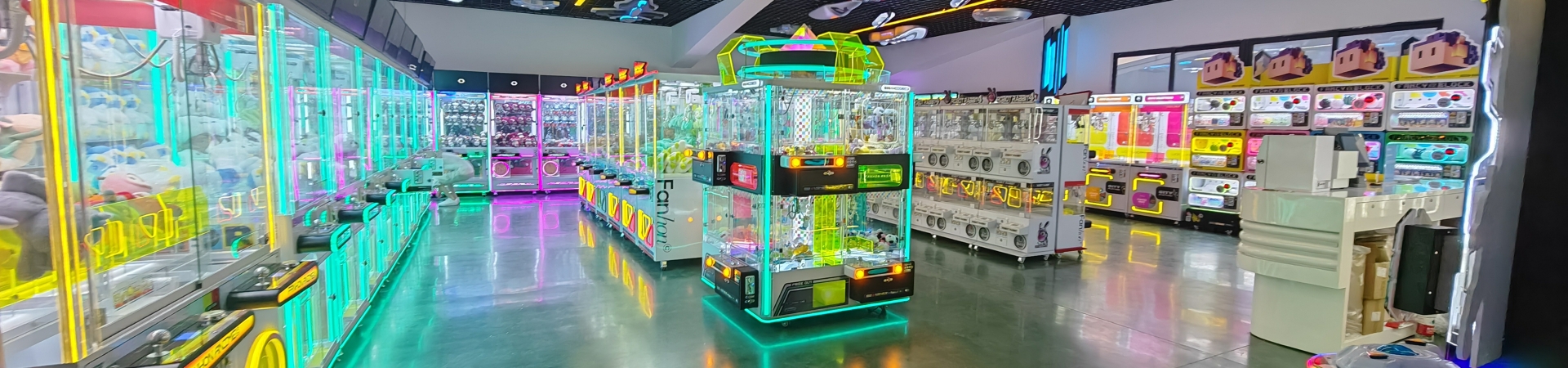
Quick Answer: Claw machine strength should be set so that approximately 1 in 5 to 1 in 8 plays results in a win, depending on prize cost. Use the machine's built-in prize interval (payout ratio) controller to dial in the win rate, and adjust claw grip strength independently for physical difficulty. A win rate that feels "almost winnable" retains players; a win rate that feels rigged drives them away permanently.
Why Claw Strength Directly Affects Revenue and Retention
Players don't return to machines they've lost trust in. A 2019 study from the University of Waterloo on near-miss mechanics in games found that near-miss outcomes increase the motivation to continue playing by 32% compared to clear losses. This same principle applies directly to claw machines.
The goal is not maximum difficulty—it is perceived fairness paired with achievable challenge.
Operators who set win rates too low (1 in 20+) see a short-term revenue spike followed by a reputation collapse.
Operators who set win rates too high (1 in 3) erode their prize inventory margin. The sweet spot balances player satisfaction, repeat visits, and profitability.
Understanding the Two Types of "Strength" Controls
Most commercial claw machines have two separate adjustable parameters:
1. Grip Strength (PWM/Claw Motor Current)
This controls how tightly the claw holds the prize after picking it up. Typically set via a percentage dial or digital controller (0–100%).
A setting of 30–50% is standard for soft plush prizes;
60–75% for harder or heavier items.
2. Prize Interval / Payout Counter (Win Rate Controller)
This is a programmable counter—often labeled "prize every X plays" or "win rate %"—that determines how often the claw receives a "strong grab" versus a "weak grab."
On a strong-grab cycle, the claw grips at its full programmed strength.
On weak-grab cycles, it releases prematurely.
These two settings work together.
Setting grip strength at 80% but a win interval of 1 in 20 means players will feel the claw grip but drop the prize—the most frustrating combination. Avoid this.
Recommended Strength Settings by Prize Type
| Prize Type | Claw Grip Strength | Recommended Win Rate | Notes |
| Small plush (under $3 cost) | 40–55% | 1 in 5–6 plays | Easy entry-level wins keep kids engaged |
| Medium plush ($3–$8 cost) | 55–65% | 1 in 7–10 plays | Standard family FEC setting |
| Large plush ($8–$20 cost) | 65–75% | 1 in 10–15 plays | Visible prize drives aspirational play |
| Electronics / gift cards | 75–85% | 1 in 15–20 plays | High-value items; clearly communicate prize value |
| Capsules / candy | 30–45% | 1 in 4–6 plays | Small wins create high play volume |
Settings are starting points. Adjust based on your specific machine model and local price point.
Step-by-Step: Setting Up Your Claw Machine for Profit and Retention
Step 1: Calculate Your Target Win Cost
Divide the prize retail value by your desired margin:
- Prize cost to you: $5.00
- Desired margin: Earn $1.50 per play at $1.00/play price
- Target: award a prize every 3–4 plays? No—that's too generous.
- Standard model: prize cost ÷ (play price × win interval) = cost of goods ratio
- Example: $5 prize ÷ ($1.00 × 10 plays) = 50% COG ratio. This is acceptable.
- Most successful operators target a 30–45% COG ratio on claw machines.
Step 2: Set the Prize Interval Counter
Enter the machine's operator menu (usually via a key switch or back panel access code). Set the "prize every X plays" counter to your calculated interval. Document this in your maintenance log.
Step 3: Set Grip Strength for the Physical Win
After a strong-grab cycle is triggered, the claw must physically be able to hold the prize. Test with your actual prize inventory—plush toys with smooth fabric require higher grip than toys with velcro-friendly textures.
Step 4: Conduct a 20-Play Test
Run 20 test plays manually and record:
- How many resulted in a win
- Whether prizes dropped on the way to the chute
- Whether the claw visibly grips on win-cycle plays vs. weak plays
Adjust grip strength if prizes drop too often on triggered win cycles.
Step 5: Monitor and Iterate Weekly
Check prize count against plays (most digital machines log this). Adjust interval if you're seeing:
- More than 1 win per 5 plays → increase interval
- Player abandonment after 3+ plays → consider decreasing interval by 1–2 plays
Regulatory Considerations
In many jurisdictions, claw machines are classified as amusement devices, not gambling, as long as skill plays a role and prizes are always available for selection. However, some countries and U.S. states have regulations on minimum win rates or prize value-to-cost ratios:
- Japan: UFO catcher machines are tightly regulated; operators must post prize acquisition rates.
- UK: The Gambling Commission classifies certain prize machines; check the Gambling Act 2005 exemptions for "crane grab machines."
- Australia: State gaming authorities regulate prize redemption machines differently by state.
- United States: Most states regulate claw machines as amusement devices; consult your state's Department of Revenue or Gaming Control Board.
Common User Questions (Q&A)
Q1: My claw grips the prize perfectly but always drops it before the chute. What's wrong?
This is a "drop zone" issue, not a grip strength issue. The claw motor is likely set to release too early in the travel arc, or the prize interval counter is triggering a "release early" weak-grab on non-win cycles even when physical grip looks strong. Access the machine menu and look for a "drop zone delay" or "release position" setting. Also check whether the claw arm guide rails are worn, causing wobble mid-transit.
Q2: Should I use the same strength setting for all prizes in a mixed-prize machine?
No. Mixed-prize machines (e.g., large and small plush together) should use a moderate grip setting tuned to the lightest prize. Heavier prizes in the same machine will naturally be harder to win—creating a built-in difficulty gradient without additional configuration. Curate prize sizes carefully for mixed machines.
Q3: Players are complaining the machine is "rigged." How do I address this without changing my settings?
Transparency helps. Post a small sign on the machine: "This machine awards a prize approximately every X plays—your skill determines WHICH prize." This reframes the experience from "rigged odds" to "guaranteed outcome with skill element." Some operators use a "guaranteed win" counter display (available on modern machines) to show players how close they are to a triggered win cycle.
Standard Citation
> University of Waterloo, Department of Psychology. Near-Miss Effects and Persistence in Chance-Based Games. Waterloo, ON: UW Press, 2019. https://uwaterloo.ca
> Gambling Commission (UK). Crane Grab Machines: Classification and Compliance Guidance. Birmingham: UK Gambling Commission, 2022. https://www.gamblingcommission.gov.uk
> Amusement and Music Operators Association (AMOA). Technical Best Practices for Claw Machine Operation. Chicago, IL: AMOA, 2023. https://www.amoa.com
> IAAPA. Amusement Game Compliance and Safety Guide. Orlando, FL: IAAPA, 2022. https://www.iaapa.org